
 Skip to content
Last November, in Washington DC, last-minute language was inserted into the Continuing Resolution needed to re-open the federal government, that would reverse existing federal law and ban legal hemp, starting on December 1st, 2026. What it mostly accomplished was to show Americans what’s wrong with today’s political process, and anger most other legislators.
Both Sen. Mitch McConnell R-KY, and Rep. Andy Harris R-MD, the authors behind the prohibitionist language, should be ashamed of their actions. Their small minority cheated their legislative colleagues, and the American people.
The two of them conspired to subvert the democratic process by literally slipping language related to federally legal hemp, the same language that had been removed by unanimous vote last June, into the supposedly “clean” continuing resolution (CR) to reopen the federal government.
They literally slipped it in at the last moment, allowing no opportunity for input from anyone. (Very democratic, wouldn’t you say?)
They only succeeded for one reason: The CR had to be signed. The government had been shut down for too long and it simply had to be reopened. No one wanted the shutdown to continue through the holidays, and the language was literally slipped into a 100-page bill the night before its signing.
At this point, I’m happy to say that I do not believe it’s going to happen. Already, there are at least three bills proposed that would override that “ban.”
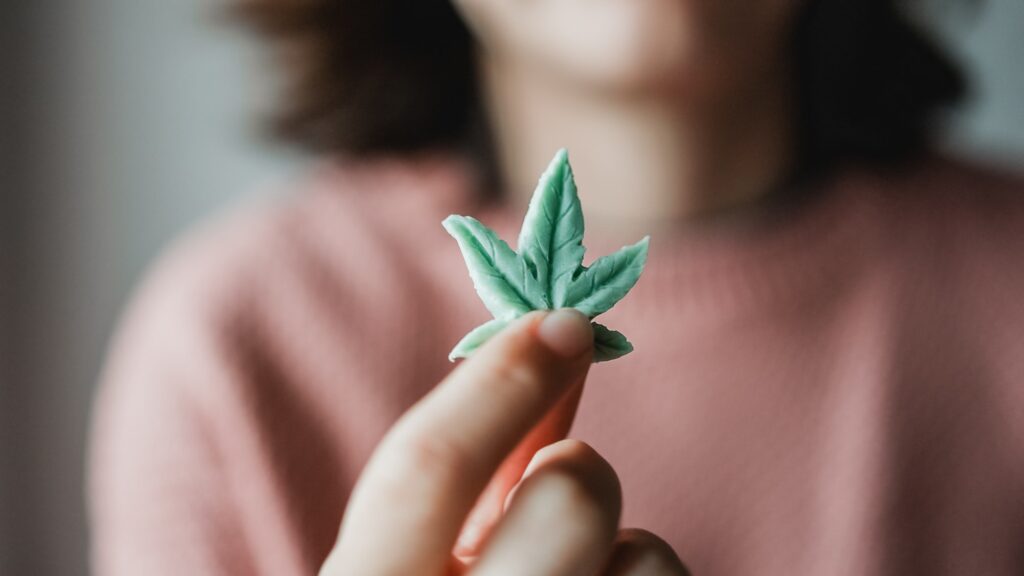
First of all, hemp has been legal at the federal level since 2018… almost eight years. Hemp was tightly defined and made federally legal by the passing of the 2018 Farm Bill… which ironically was championed by Sen. Mitch McConnel (R-KY) himself, and signed by President Trump.
And, a $78 billion industry was born, which now employs 300,000 Americans. It’s not really just about “getting high,” it’s really more about wellness. It’s about finding natural alternatives to benzodiazepines, antidepressants, or opioids. It’s about wanting a healthier lifestyle.
It’s about the 70-year-old grandfather who takes a gummy to help him sleep. Or, the 65-year-old grandma who takes a gummy to relieve joint pain. The chemotherapy patient who uses THC to stimulate appetite, and reduce nausea or anxiety. And yes, the 40-year-old who likes to feel a little high on a Saturday night without alcohol.
That 2018 law, defined legal hemp as:
“… containing less than 0.03% Delta-9 Tetrahydrocannabinol (THC) by dry weight.”
That’s pretty specific. More than 0.3% Delta-9 THC… not legal. Less than that amount, legal. Pretty simple, right?
We don’t make something that can be mildly intoxicating illegal in this country, do we? (See why THC milligram counts don’t predict intoxication.) I mean, it’s wildly ironic that one of the major supporters of the ban was the alcohol/spirits industry. And they only wanted the ban because they think THC is eating into their whiskey sales — exposing deeper issues in how the THC market is regulated. So, let’s stop pretending that this ban has anything to do with THC being intoxicating. Clearly, none of this has anything to do with that.

The definition of hemp set into law by the 2018 Farm Bill, limited the amount of Delta-9 THC that could be present in any hemp product to 0.3%.
That’s 0.3%. One third of one percent. Want to compare that to regular full-strength cannabis… not hemp, but good old, full-strength marijuana?
In states like California and Oregon typical top-shelf cannabis hovers around 27%, with some strains reporting numbers in the high 30s, no pun intended. That’s full-strength marijuana.
We’re talking about a version of the cannabis plant that is lab tested to show that it CONTAINS LESS THAN 0.3%. When you hear anyone preaching that evil weed must be banned, it helps to keep the actual numbers in mind.
Did you know that non-alcoholic (NA) beer does contain trace amounts of alcohol?
The limit is legally defined in the U.S. as less than 0.5% Alcohol by Volume (ABV). And, because NA beer contains LESS TAHN 0.5% alcohol, federal law doesn’t classify it as an alcoholic beverage.
Please read that again: “… because NA beer contains LESS TAHN 0.5% alcohol, federal law doesn’t classify it as an alcoholic beverage.”
No one freaks out over beer than contains less than 0.5% alcohol by volume. In fact, the age to drink non-alcoholic (NA) beer varies by state, but it’s legal for those under 21 in states like Texas and California, while other in other states, it’s 18+. (Okay, so Florida and Kansas treat it like regular beer. So what?)
The point is that we’re talking about hemp, which is legally defined as cannabis containing less than 0.3% Delta-9 THC by dry weight, NOT FULL-STRENGTH CANNABIS… and yet McConnell and Harris are sneaking around to try to ban it immediately. As if it represents some sort of danger.
Why in the world are we listening to either of these guys on this topic? Every single poll taken on the issue shows more than 70 percent of Americans want cannabis to be legal in some form, and the latest Pew Research study showed that number to be over 88 percent.
I haven’t written about it until now because I wanted to be more certain about what would happen as a result. We knew it wouldn’t go smoothly, but we couldn’t be certain how it would go, until now. And now, we fully believe that the prohibitionists will not win. The “ban” won’t happen.
There are now several competing bipartisan bills advancing though the legislative process. It seems pretty darn clear that most of what was slipped into the CR at the last minute will have accomplished nothing, except to make people mad and shine a light on the issue.
The reaction to McConnel’s dirty dealing was immediately met with outrage all around. No one liked it.
It turns out that many of our legislators don’t like being stuffed into a bag. Apparently, they actually want to weigh in when legislation affecting the entire country is on the table. Sen. Ted Cruz voted to support Rand Paul’s amendment, along with many others.
The Alcohol Industry…
On November 10, 2025, several alcohol industry trade associations sent a letter in support of banning hemp. They believe that legal hemp has caused people to drink less alcohol, so to their way of thinking, if you make hemp illegal, people will be forced to drink hard liquor again. Basically, they’re against whatever they see as competition for booze.
(Side Note: Sen. Mitch McConnell is from Kentucky and they make a great deal of very good bourbon there, in case you weren’t already aware. Rep. Andy Harris is just a kook.)
Interestingly, a separate, but closely related coalition of over 50 alcohol distributors sent their own letter to senators opposing the hemp ban language, noting that “hemp products have created jobs, driven new investment, and helped us meet changing consumer demand.”
Americans are consuming less alcohol for the same reasons that fewer Americans smoke cigarettes… they know it’s bad for their health. Young people have grown-up with this knowledge. I don’t care what happens, no one is going to persuade younger people to start drinking more bourbon, for example, and it certainly won’t be accomplished by making hemp illegal.
Movements like “sober curious,” “Dry January,” and wellness focus promote healthier lifestyles, making alcohol less central to socializing. Gen Z and Millennials prioritize mental and physical well-being, viewing alcohol’s negative impacts more critically than prior generations.
As a result, the social pressure to drink isn’t what it used to be. Today, it’s become more acceptable and even “cool” to not drink. Hemp has NOTHING to do with any of that.

The hemp industry, to its credit, wasted no time leaping into action and today, all indications point to their efforts being met with success. (Not to say that there isn’t more work to be done, and more about that will follow.)
Hemp Industry and Farmers of America, HIFA, the industry’s lobbying organization describes itself as:
“… a nonpartisan coalition of hemp industry advocates representing the interests of the industry – from farmers, veterans, and manufacturers to retail stores. The group says it represents “both a free market and a common-sense approach to the hemp industry.”
Having attended many of their online meetings, their initial objectives focused on getting an 18-month delay in the hemp ban’s implementation, the thinking being that such a delay would allow time for more considered and focused legislation… and be achievable.
Well, on January 13, 2026, a bi-partisan bill was introduced that would delay the implementation by two years from the current implementation date of December 1, 2026. So, as a practical matter, that’s a two-year and nine-month delay.
Surely that’s enough time to get it right, one would certainly think. The bill was introduced by a bi-partisan group, led by a Republican from Indiana, Jim Baird.
Other members include: Rep. James Comer, R-KY, Rep. Angie Craig, D-MN, Rep. Tim Moore, R-NC, and Rep. Gabe Evans, R-CO. Comer heads the House Oversight and Accountability Committee, and Craig serves as the ranking member of the House Agricultural Committee, so it would seem there’s some serious juice behind the bill’s passage.
The new legislation is called The Hemp Planting Predictability Act and it’s all about the farmers.
As Baird stated it when introducing the new bill:
“Congress should not have passed such a sweeping policy change that upends a growing industry. Congress should have been given farmers more time, creating a more stable environment for farmers to modify their future planting decisions. I am proud to introduce this legislation to ensure farmers have predictability and sufficient time to adjust to new laws that affect their livelihood.”
Just a few days ago, Johnathan Miller, General Counsel for The U.S. Hemp Roundtable, another industry trade association, told Law360:
“The entire hemp industry is united behind passage of [this bill]. A two-year extension of the hemp moratorium is critical to provide farmers certainty concerning their 2026 crops, and to provide an appropriate runway to allow for the passage and implementation of a robust regulatory framework for hemp products.”
And, it’s Not the Only Proposal Being Introduced…
Sen. Rand Paul, in an effort to get out of the way, has said that he’s considering language that would eliminate any federal ban and simply return the issue to the states. It’s not a great idea, by any means, but it beats prohibition.
I suppose he thinks that way because that approach is working so well? Does it make any sense that something would be illegal in North Carolina, but legal a few miles up the road in Virginia? Come on…
And, another…
In December, Sen. Ron Wyden (D-OR) and Sen. Jeff Merkley (D-OR), reintroduced the Cannabis Safety and Regulation Act, which would regulate products containing hemp-derived cannabinoids, including a minimum purchasing age of 21, various manufacturing standards, along with imposing testing and labeling requirements, and penalties for false or misleading advertising.
All of which make sense.
Their proposal would ban all synthetic cannabinoids, like THC-P or THC-O, but would allow cannabinoids that are converted from plant-extracted compounds, including Delta-8 THC, which comes from CBD. It wouldn’t stop states from enacting their own policies concerning hemp-derived products, something most states have already done, and it would not allow states to prohibit the transportation or shipment of such products into their states.
This proposal from Oregon would actually go a long way to solving any real or perceived problems, and in a sane, functional legislature, it would probably pass. In ours, however, although it might make sense, it might be more popular to simply delay whatever might happen for two years, and then get ready for the mid-term elections next November.
(I don’t know if that’s what will happen, it’s just an opinion based on watching my government’s dysfunction for the last 50 or so years.)
Unquestionably, the good news is that Mitch McConnell’s and Rep. Andy Harris’ attempt to subvert our democracy in order to force the entire country to bend to their irrational, prohibitionist views, should and I believe will, be killed dead.
Regardless of how it all shakes out, at least the 2-year delay will allow time for Americans to voice their views, and legislators time to craft a thoughtful solution, rather than knee-jerking a path towards prohibition only to satisfy the desires of the very few over the wants and needs of the clear majority.
For that small minority to come out on top required cheating, which is exactly what McConnell and Harris tried to do. If either thought they would legitimately prevail, they wouldn’t have needed to slip their prohibitionist language into a supposedly “clean CR” to reopen the government, in the middle of the night.
It’s Our Time.
I really believe that this is the time many have waited for: A chance to put this issue to bed once and for all. We’ve got more than two years to change how our legislators view hemp. We’re not alone, there are not only millions of us, but there are also tens of thousands of businesses fighting right beside us.
Yes. Hemp remains federally legal under the 2018 Farm Bill as long as it contains less than .03% delta-9 THC by dry weight. The language banning hemp wouldn’t go into effect December, 2026, so there’s planty of time to make sure that doesn’t happen (and at this point we don’t believe it will).
Lawmakers have introduced several new bills that would define legal hemp, and propose new regulations. The “ban” language that passed as part of the CR to re-open the federal government last fall, appears to have no broad support.
It’s possible, but seems unlikely, especially with your support.
The current language, if not overridden by other bills, would ban hemp as of December 1, 2026.
Why is hemp regulation becoming stricter now?
Increased federal scrutiny, political pressure, and confusion around THC products have pushed Congress to reconsider how hemp is regulated.
We will continue to cover all meaningful developments related to what’s happening to hemp in Washington. And, we’ll be sending you tools that you can use to get others involved.
We shouldn’t be arresting people for using cannabis, and we certainly don’t need our government telling us we can’t take a sleep gummy or a gummy for pain, or to reduce anxiety… the government has no business telling me to take pharmaceuticals instead of a gummy with some small amount of THC inside.
It’s 2026, for God’s sake. Let’s put this to bed now and forever.
CLICK TO SUBSCRIBE BELOW AND YOU WON’T MISS ANYTHING!